
What Happens If You Fail Final Inspection in Melbourne? (2026 Guide)
Updated: Aug 9
Why Do Tenants Fail Final Inspection in Melbourne?
Moving out of a rental property can be stressful, and many tenants assume that a quick clean before handing back the keys will be enough. However, final inspections are often more detailed than people expect, and even a property that looks tidy at first glance can still receive cleaning-related comments.
In Victoria, property managers typically compare the condition of the property with the original entry condition report while allowing for fair wear and tear. According to Consumer Affairs Victoria, renters are generally expected to return the property in a reasonably clean condition, rather than in brand-new condition. This means normal ageing is acceptable, but avoidable dirt, grease, soap residue, food spills and neglected cleaning may still become issues during the inspection.
Many tenants are surprised to learn that inspection comments are rarely caused by one major problem. Instead, they usually result from a collection of small details that build up over time.
If you'd like to explore these common cleaning mistakes in more detail, read our guide on Why End of Lease Cleaning Fails in Melbourne.
Some of the most common examples include:
Grease around cooktops, ovens and rangehood filters
Soap scum or hard water stains on shower screens
Dust on skirting boards, window tracks and inside cupboards
Fingerprints on light switches and door handles
Carpet stains or carpets that require professional steam cleaning under the tenancy agreement
These small issues may not seem significant during everyday living, but they often become much more noticeable when the property is empty and inspected under bright lighting.
Understanding how the inspection process works can help you identify and fix these issues before the final inspection.
What Happens After You Fail a Final Inspection?
Failing a final inspection does not automatically mean you will lose your bond. In many cases, the property manager or landlord will first identify the cleaning issues and give you an opportunity to address them before any deductions are considered.
While the exact process may vary between rental providers and property managers, the following steps are common in Melbourne rental inspections.
1. The Property Manager Identifies Cleaning Issues
During the inspection, the property manager compares the property's current condition with the original entry condition report while allowing for fair wear and tear.
Rather than looking only at whether the home appears clean overall, they often inspect specific areas closely, including kitchens, bathrooms, window tracks, skirting boards, cupboards and carpets. Even if the property looks tidy, small details such as grease, soap scum or dust may still be noted.
2. You May Receive a List of Items to Rectify
If cleaning issues are found, the property manager will usually provide a list of areas that require further attention. Many agencies also include photographs to show exactly what needs to be cleaned.
Common examples include:
Grease remaining inside the oven or rangehood filters
Soap scum or water stains on shower screens
Dust inside cupboards or window tracks
Marks on skirting boards or light switches
Carpets that still require professional steam cleaning if specified in the tenancy agreement
3. You May Be Given Time to Re-Clean
For cleaning-related issues, many Melbourne property managers allow tenants a short period to return and complete the required cleaning before arranging another inspection.
The timeframe varies depending on the agency, but 24 to 72 hours is common. Responding promptly usually gives you the best chance of resolving the issue before any further action is taken.
4. A Re-Inspection May Be Carried Out
After the requested cleaning has been completed, the property manager may revisit the property to confirm that the identified issues have been resolved.
If the property now meets the expected standard, the inspection process can usually continue without further cleaning concerns.
5. Cleaning Costs May Affect Your Bond
If the required cleaning is not completed, or if the property still does not meet the expected condition after being given an opportunity to rectify the issues, the rental provider may arrange cleaning and seek to recover the reasonable cost through the bond.
For this reason, dealing with cleaning issues quickly is often the simplest and least expensive option.
Understanding this process is helpful, but knowing which cleaning issues most commonly lead to inspection comments is even more valuable. Below are several real examples from Melbourne rental properties that demonstrate the areas property managers most frequently notice during final inspections.
Real Cleaning Examples From Melbourne Final Inspections
Many cleaning-related inspection comments involve areas that tenants simply don't notice while living in the property. Once furniture has been removed and the home is empty, grease, soap scum and other neglected details often become much more visible.
Below are several real examples from end of lease cleaning projects completed in Melbourne. They demonstrate the types of cleaning issues that are commonly identified before a final inspection and how they were resolved before the property was ready for handover.
Example 1 – Grease Around the Cooktop

In this kitchen, the benchtops had already been wiped and the room looked reasonably clean at first glance. However, once the burner caps were removed, heavy grease and burnt food residue were still present around the cooktop.
After detailed degreasing and cleaning, the cooktop was restored to a much cleaner condition. Areas around gas burners are often inspected because grease can build up gradually and is easy to overlook during routine cleaning.
Example 2 – Soap Scum on the Shower Screen

Bathrooms often appear clean until natural light or inspection lighting reveals soap scum and mineral deposits on the shower glass.
In this property, the shower screen had accumulated hard water staining over time. After removing the buildup, the glass became clear again and the bathroom presented much better for the final inspection.
Example 3 – Detailed Oven Cleaning
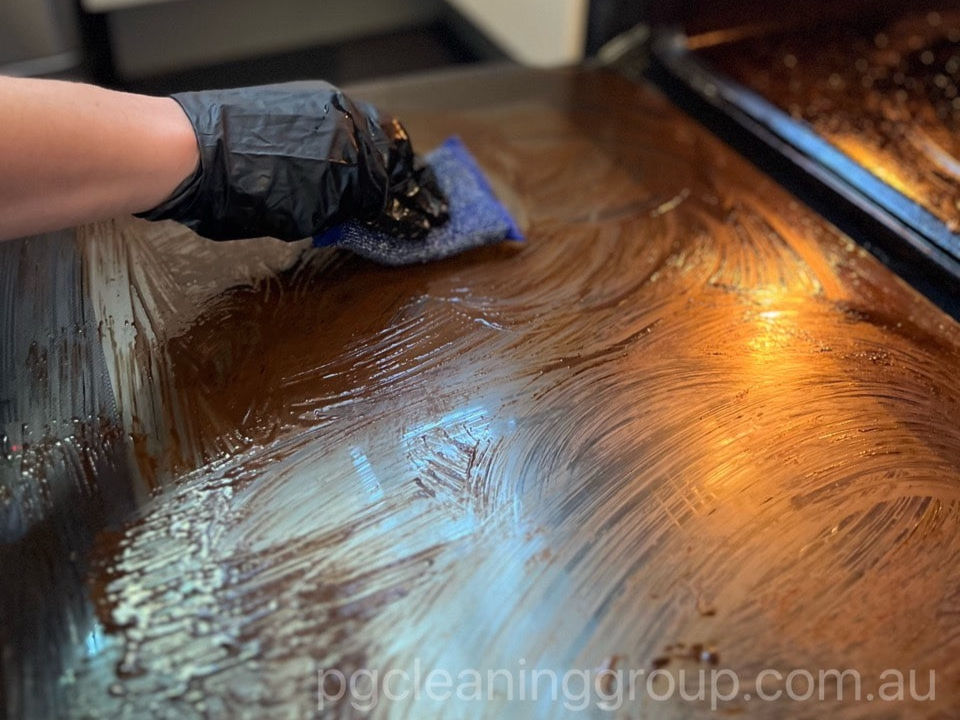
Ovens are one of the kitchen appliances that property managers inspect most closely during many final inspections. While the outside of the appliance may appear clean, baked-on grease frequently remains around the door, edges and interior surfaces.
Removing this type of residue usually involves several stages of degreasing and detailed cleaning rather than a quick surface wipe. Paying attention to these hidden areas can help reduce the likelihood of additional cleaning requests after the inspection.
These examples show that cleaning comments are often caused by small details rather than major problems. Understanding which areas attract the most attention can help tenants prepare more effectively before handing back the keys.
In the next section, we'll look at the cleaning tasks that property managers commonly inspect during a Melbourne final inspection.
Ovens are one of the kitchen areas most frequently mentioned during final inspections. We explain why in our guide to Why Dirty Ovens Fail Final Inspection in Melbourne.
What Should You Do After Receiving Cleaning Comments?
Receiving a list of cleaning comments after a final inspection can be frustrating, particularly if you believed the property was already clean. However, responding calmly and addressing the requested items promptly is often the quickest way to move the inspection process forward.
Before arranging any additional cleaning, it's worth reviewing each item carefully and confirming exactly what the property manager has identified.
Read the Inspection Comments Carefully
Most property managers will identify the specific areas that require further attention. Some may also include photographs or written notes to explain the cleaning concerns.
Rather than cleaning the entire property again, focus on the areas that have been mentioned. This can save both time and unnecessary work.
Separate Cleaning Issues from Property Damage
Not every inspection comment relates to cleaning.
Some issues may involve maintenance, accidental damage or normal wear and tear rather than cleanliness.
Examples of cleaning-related issues include:
Grease inside ovens or rangehood filters
Soap scum on shower screens
Dust inside cupboards
Dirty window tracks
Marks on light switches
If you're unsure what is generally considered a cleaning issue, Consumer Affairs Victoria explains that rental properties should usually be returned in a reasonably clean condition, taking normal fair wear and tear into account.
Complete the Requested Cleaning Promptly
If you've been given an opportunity to return to the property, try to complete the requested cleaning within the timeframe provided by the property manager.
Many re-clean requests involve only a few specific areas rather than the entire property.
Paying attention to the requested items can often resolve the issue quickly and allow the inspection process to continue.
Take Photos After the Re-clean
Once the additional cleaning has been completed, take clear photographs of the areas that were addressed.
Photos provide a useful record of the property's condition and can help demonstrate that the requested cleaning has been completed if any questions arise later.
Keep Any Cleaning Receipts
If professional cleaning has been arranged, keep a copy of the invoice or receipt.
This may be useful if the property manager requests confirmation that particular services, such as carpet steam cleaning, have been completed.
While many cleaning comments can be resolved relatively quickly, tenants often worry that a failed inspection automatically means losing part of their bond.
Fortunately, this is not always the case.
The next section explains how cleaning issues may affect your bond and what Consumer Affairs Victoria says about returning a rental property in a reasonably clean condition.
Does Failing a Final Inspection Mean You Lose Your Bond?
Many tenants worry that a failed final inspection automatically means they will lose part or all of their bond. In reality, this is not always the case.
A failed inspection simply means the property manager or rental provider believes there are issues that need to be addressed before the tenancy can be finalised. In many situations, cleaning-related concerns can be resolved by completing the requested cleaning within the agreed timeframe.
According to Consumer Affairs Victoria, renters are generally expected to return the property in a reasonably clean condition, taking fair wear and tear into account. This means the property does not need to be returned in brand-new condition, but avoidable cleaning issues such as grease, soap scum, dust and food residue may still require attention.
For example, the following are commonly treated as cleaning-related issues:
Grease inside ovens and rangehood filters
Soap scum on shower screens
Dust in window tracks and cupboards
Marks on light switches and door handles
Dirty skirting boards and floors
By contrast, normal ageing of the property or everyday wear is generally considered separately from cleaning.
If cleaning concerns are resolved promptly, many inspections can proceed without further cleaning-related issues. However, if the requested cleaning is not completed, or the property is still not returned in a reasonably clean condition, the rental provider may arrange additional cleaning and seek to recover the reasonable cost through the bond.
For this reason, responding quickly to inspection comments and understanding exactly what has been requested is often the best way to avoid unnecessary delays or additional costs.
Knowing what may affect your bond is important, but the best approach is to reduce the likelihood of receiving cleaning comments in the first place.
Before handing back the keys, a final walk-through can help identify small issues that are easy to miss during everyday cleaning.
Before You Hand Back the Keys
Whether you've been asked to return for a re-clean or you're preparing for your first final inspection, taking one last walk-through of the property can help identify small cleaning issues before they become inspection comments.
Rather than checking whether the property simply looks tidy, inspect it from the perspective of the property manager. Empty rooms often reveal dust, fingerprints and grease that were easy to overlook while the property was still occupied.
Pay particular attention to areas that are commonly mentioned during final inspections, including:
Oven and cooktop surfaces
Rangehood filters
Shower screens and bathroom fittings
Window tracks and sliding door tracks
Skirting boards and light switches
Inside cupboards and drawers
Door handles and frequently touched surfaces
Floors, corners and hard-to-reach areas
If possible, inspect the property during daylight or use a bright torch to check hidden areas. Grease on kitchen appliances, soap residue on shower screens and dust inside cupboards are often much easier to see under stronger lighting.
If you've completed additional cleaning after receiving inspection comments, taking clear photos of the cleaned areas can also provide a useful record before the property manager returns for a re-inspection.
For a more detailed room-by-room guide, read our Melbourne Final Inspection Cleaning Checklist (2026 Guide) before handing back the keys.

Frequently Asked Questions
Can I lose my bond immediately if I fail the final inspection?
Not necessarily. A failed final inspection does not automatically mean you will lose your bond. In many cases, property managers first provide a list of cleaning issues and allow tenants an opportunity to complete additional cleaning before the inspection process continues.
Can I return to the property and clean it again?
Often, yes. If the inspection comments relate to cleaning rather than damage, many property managers will allow tenants to return and rectify the identified areas within an agreed timeframe. The exact process may vary depending on the rental provider or managing agency.
Is professional end of lease cleaning legally required?
Not always. Consumer Affairs Victoria generally expects rental properties to be returned in a reasonably clean condition, taking fair wear and tear into account. Whether professional cleaning is required depends on your tenancy agreement and the condition of the property.
What cleaning issues are most commonly identified during a final inspection?
Kitchens and bathrooms are among the areas most frequently inspected. Ovens, cooktops, rangehood filters, shower screens, window tracks, skirting boards and carpets are commonly mentioned when additional cleaning is requested.
Should I take photos after completing a re-clean?
Yes. Taking clear photos after additional cleaning provides a useful record of the property's condition before the final inspection or re-inspection. This can also help if there are later questions about whether the requested cleaning was completed.
Need Help After a Failed Final Inspection?
Receiving cleaning comments after a final inspection doesn't necessarily mean you'll lose your bond. In many cases, addressing the identified cleaning issues promptly can help keep the inspection process moving and reduce unnecessary delays.
At PG Cleaning Group, we provide inspection-focused end of lease cleaning and re-clean services across Melbourne's south-east, including Clayton, Cheltenham, Oakleigh, Mount Waverley and surrounding suburbs. Our team pays close attention to the kitchen, bathroom and detail-cleaning areas that property managers commonly inspect.
If you've received cleaning comments after your inspection, we're happy to help you prepare the property for re-inspection.
📞 Call: 0416 711 327
👉 Check your exact cleaning price instantly online or request a free quote today.


Comments