
Why Dirty Rangehood Filters Fail Final Inspection in Melbourne
Moving out of a rental property can be stressful enough without losing part of your bond over something hidden inside the kitchen.
In our experience, rangehood filters are one of the most commonly overlooked areas during end of lease cleaning. Many tenants focus on benchtops, stovetops and splashbacks but forget that property managers often inspect rangehood filters closely during final inspection.
Rangehood filters are only one of many details checked during a final inspection. Our Melbourne Final Inspection Checklist also highlights other commonly overlooked areas throughout the property.
According to Consumer Affairs Victoria, renters are required to leave the property reasonably clean at the end of a tenancy, taking into account fair wear and tear.
From our experience, hidden grease buildup inside rangehood filters is one of the most common kitchen issues flagged during final inspections in Melbourne. Even when the rest of the kitchen appears clean, neglected filters can quickly attract attention during an inspection.
Why Property Managers Check Rangehood Filters
Property managers understand that kitchens naturally accumulate grease over time, especially in rental properties where cooking happens daily.
While a rangehood may appear clean from the outside, the filter often reveals a different story.
During final inspections, property managers commonly check:
Grease buildup inside filters
Sticky residue inside the canopy
Oil splatter on exterior surfaces
Dust mixed with grease around fan openings
Rangehood light covers
Signs of poor airflow caused by blocked filters
A filter that looks acceptable from below can still appear heavily contaminated once removed and inspected properly.

What We Commonly Find During End of Lease Cleaning
During Melbourne end of lease cleaning jobs, we regularly find:
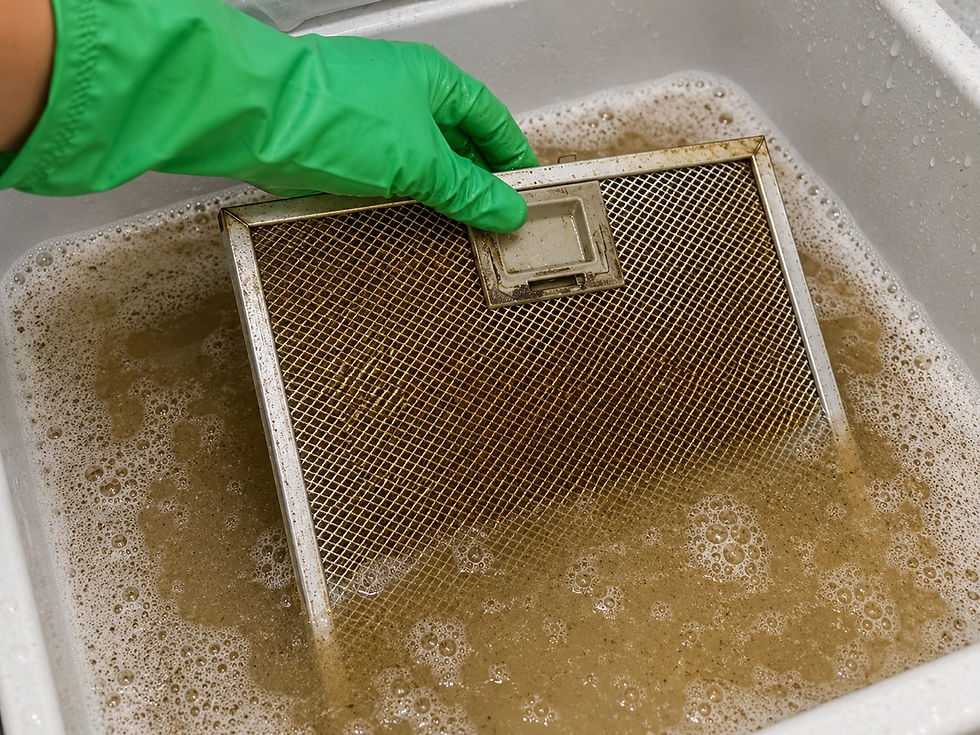
Thick grease trapped inside mesh filters
Yellow staining caused by cooking oils
Sticky residue inside the canopy
Dust mixed with grease around fan openings
Oil film covering rangehood lights
Grease dripping onto stovetops below
Many tenants are surprised by the amount of buildup hidden inside the filter because it is rarely visible during everyday use.
This is similar to other commonly missed inspection items such as dirty window tracks, where hidden buildup often becomes obvious during final inspection.
Real Inspection Example from Melbourne
Recently, we attended an end of lease cleaning job in Melbourne where the kitchen appeared clean at first glance.
The tenant had cleaned the benchtops, splashback and stovetop thoroughly. However, once the rangehood filter was removed, heavy grease buildup was visible behind the mesh.
The property manager specifically requested additional cleaning of the filter before approving the final inspection.
After a full degreasing treatment, the filter was restored and the kitchen passed inspection without further concerns.
Situations like this are common because hidden kitchen areas are often overlooked during move-out cleaning.

Why DIY Rangehood Cleaning Often Falls Short
DIY cleaning can work for light grease buildup, but many filters contain grease that has hardened over months or years.
Common mistakes include:
Only wiping visible surfaces
Not removing the filter
Using products that are too mild
Not allowing enough soaking time
Missing grease hidden inside corners
The same issue often occurs when dirty ovens fail final inspection in Melbourne because hidden grease often remains behind even after the visible surfaces have been cleaned.
How to Clean a Rangehood Filter Before Final Inspection
If you plan to clean the filter yourself, we recommend:
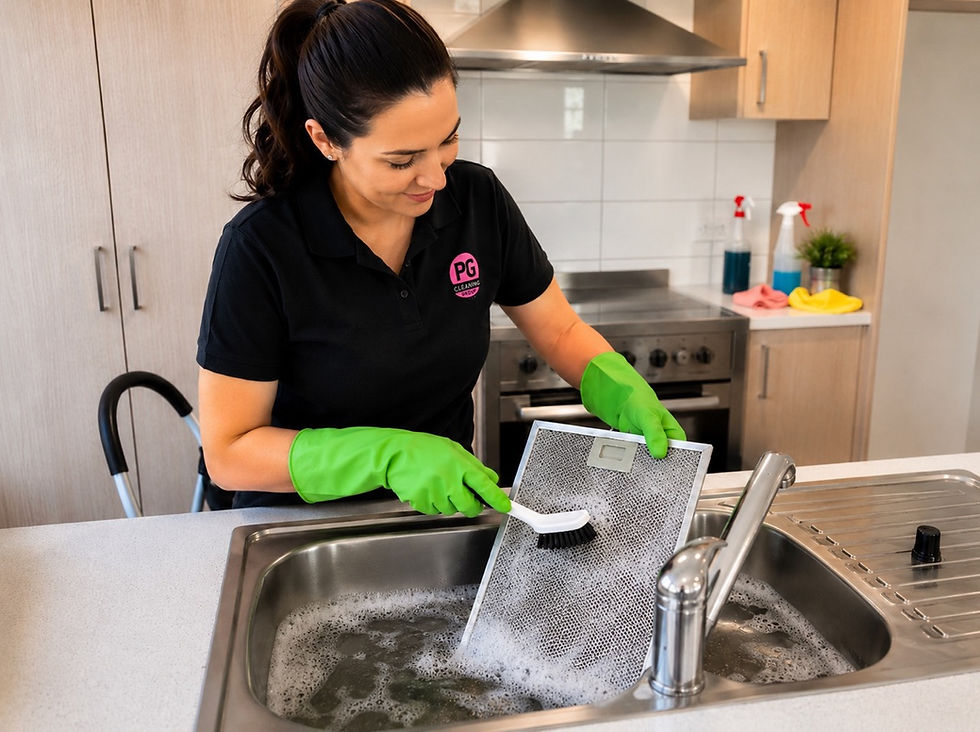
Remove the filter completely.
Soak it in hot water with a suitable degreaser.
Leave it soaking for 20–30 minutes.
Scrub both sides thoroughly.
Rinse and allow it to dry fully.
Clean the canopy before reinstalling the filter.
The goal is to remove visible grease, oil residue and yellow staining before inspection day.
When Professional Rangehood Cleaning in Melbourne Helps
Professional rangehood cleaning in Melbourne is often worthwhile when:
The filter has never been cleaned
Heavy grease buildup is present
The property is approaching final inspection
You want to reduce the risk of bond deductions
Household products are no longer effective
Many tenants choose professional rangehood cleaning shortly before moving out because hidden grease buildup can be difficult to remove using standard cleaning products alone.
This is particularly helpful when several inspection items require attention, including kitchens, bathrooms, ovens and window tracks. Professional end of lease cleaning Melbourne services can help ensure these areas are inspection-ready before moving out.
Quick Rangehood Inspection Checklist
Before inspection, check:
✔ Filter removed and degreased
✔ No visible grease buildup
✔ Interior canopy cleaned
✔ Exterior surface wiped clean
✔ Rangehood light working
✔ Fan operating normally
✔ No grease drips on the stovetop
If you can tick all of these boxes, your rangehood is much less likely to be flagged during final inspection.
Frequently Asked Questions
Are dirty rangehood filters considered fair wear and tear?
Generally, grease buildup inside rangehood filters is considered a cleaning issue rather than fair wear and tear.
Can a dirty rangehood affect my bond refund?
It can contribute to cleaning-related inspection concerns if visible grease buildup is present during final inspection.
Is rangehood cleaning included in end of lease cleaning?
Most professional end of lease cleaning services include cleaning of accessible rangehood surfaces and filters.
How often should rangehood filters be cleaned?
Rangehood filters should ideally be cleaned every few months depending on cooking frequency. However, before a final inspection, filters should be free from visible grease, oil residue and food buildup.
Get an Instant End of Lease Cleaning Quote
📞 Call: 0416 711 327
👉 Check your exact cleaning price instantly online.


Comments